

By Kurt Schou, Tiletoria consultant
You’ve seen the look, even if you didn’t know its name: floors that seem to run in one unbroken sweep from the front door to the back of the house, walls with barely a line on them, bathrooms that feel carved from a single piece of stone. That’s large format tiles at work — and if you’re planning a build or renovation, you’re probably wondering whether the look would work in your home, what it really costs, and what nobody’s telling you. Having spent years helping people answer exactly those questions on the showroom floor, here’s the honest version.
Table of Content:
What Counts as “Large Format”?
Why the Look Works
The Small-Space Myth
What It Really Costs
Why This Is Specialist Work — and the Questions to Ask Your Tiler
Will It Still Look Right in Ten Years?
What Counts as “Large Format”?
There’s no official rulebook, but in practice any tile from 600×600mm upwards is considered large format. The workhorses of the category are 600×600 and 600×1200, and the range now stretches to 800×800, 1200×1200 and slab formats of 1200×2400 and beyond — single pieces bigger than a dining table. A decade ago, these were rare in South African homes; today they’re what most people picture when they imagine a modern floor.
Why the Look Works
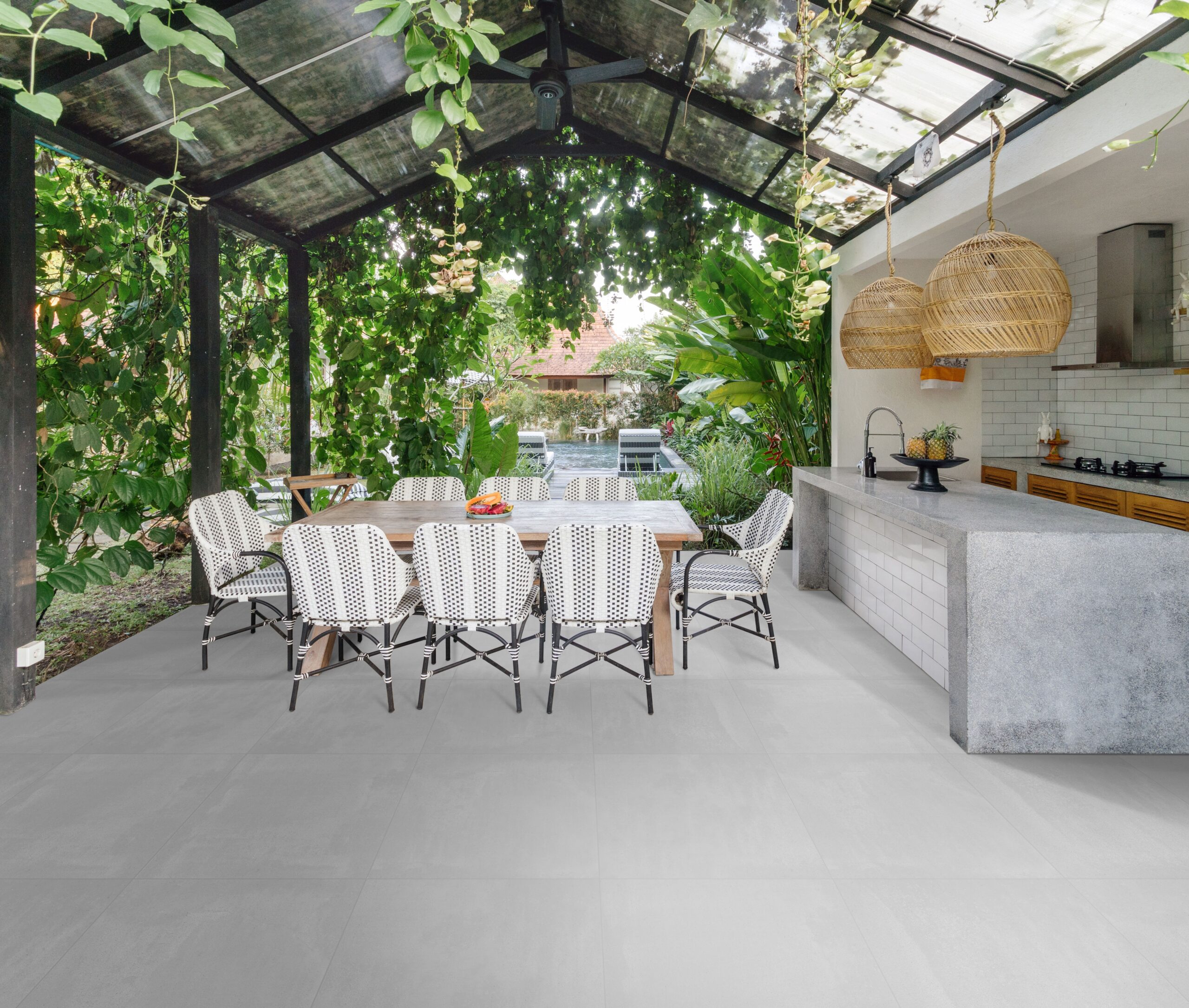
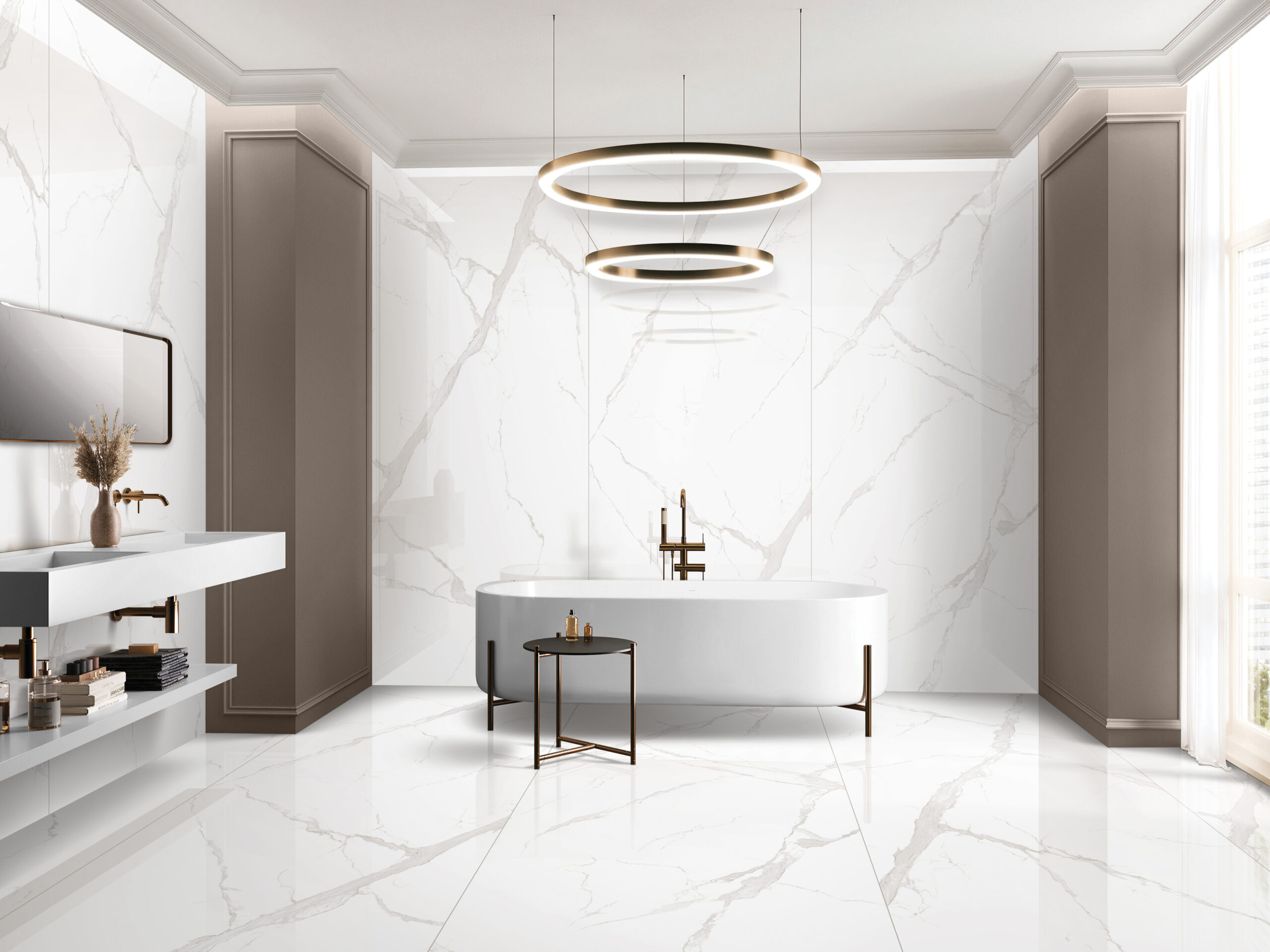
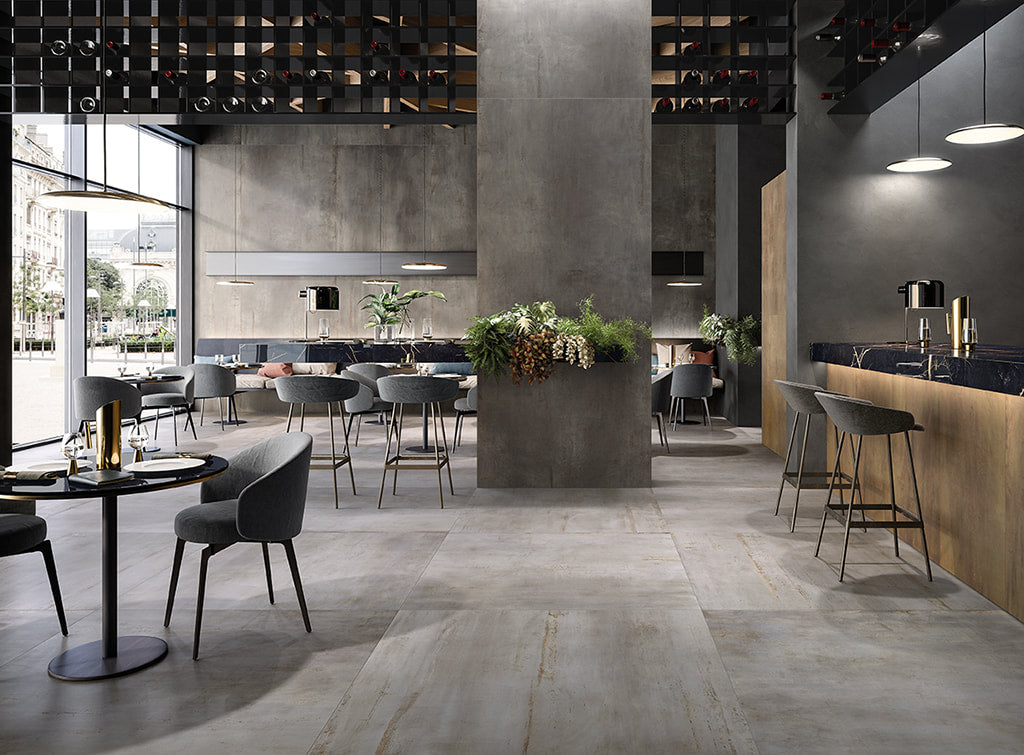
The magic is mostly about what disappears: grout lines. Fewer joints mean fewer visual interruptions, so a room reads as calmer and larger — the eye glides instead of counting squares. In open-plan homes, big tile flooring lets the kitchen, dining and living areas flow as one space instead of three, and running the same tile from inside to the patio makes even a modest home feel expansive.
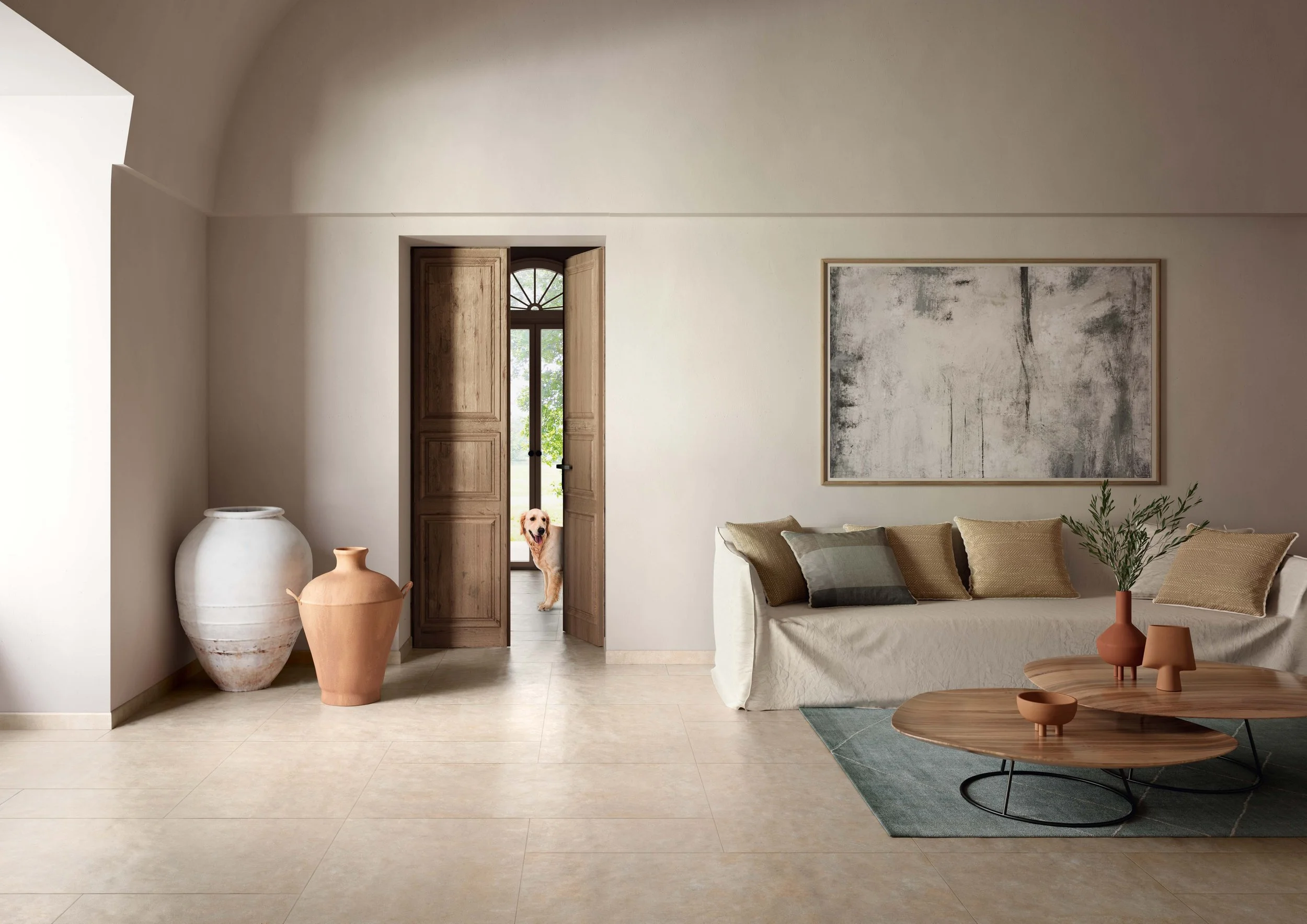
Fewer grout lines also mean less of the one part of a tiled floor that actually demands cleaning effort, which is why large format is as practical as it is fashionable for kitchen floor tiles.
The Small-Space Myth
The instinct says small room, small tiles. The showroom floor says otherwise. In a compact bathroom or entrance hall, a large tile with only a handful of joints makes the floor look bigger, not busier — it’s the grid of grout lines that shrinks a small space.
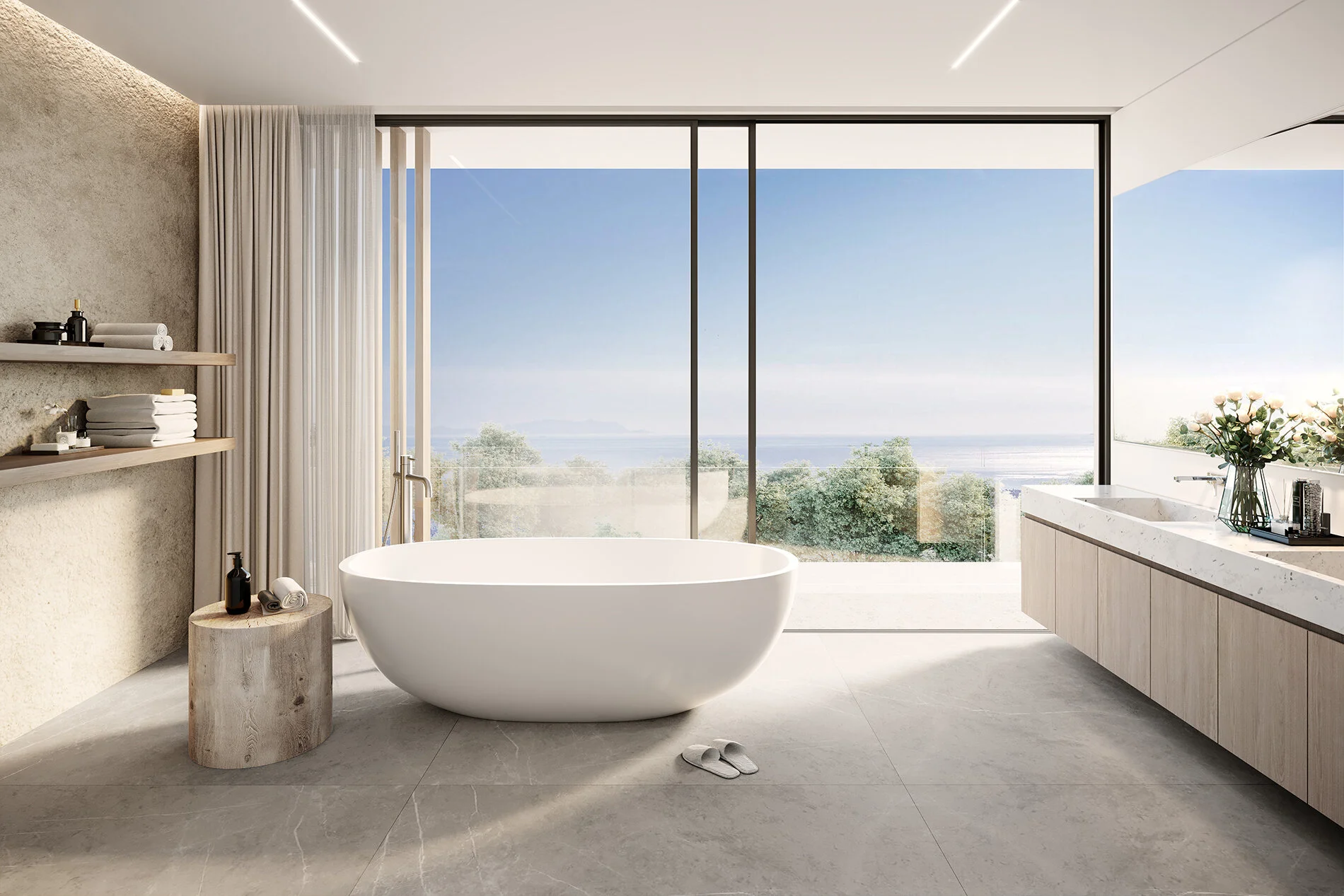
The real constraints in small rooms are practical, not visual: layout planning matters more, and falls to drains in bathrooms need thought. Done properly, some of the most convincing large-format rooms we see are the smallest ones.
What It Really Costs
Here’s the part that surprises people: the tile itself is often not much more expensive per square metre than a standard format — the difference sits in the preparation and the installation. Large tiles are unforgiving of an uneven floor, so the substrate may need levelling before a single tile is laid. They need more adhesive, applied correctly to the full back of the tile, and they take two people to carry and place.
As a rough illustrative guide, budget for installation to cost noticeably more per square metre than standard-format work, and for surface preparation as a possible extra line item — your tiler can only quote it after seeing your floor. It’s money that buys a result standard tiles can’t deliver, but it belongs in the budget from day one, not as a surprise at quote stage.
Why This Is Specialist Work — and the Questions to Ask Your Tiler
This is the single most important thing to take from this guide: large format tiles are not a job for whoever is cheapest. A 1200×2400 slab handled wrongly cracks; a floor laid without a levelling system shows “lippage” — edges that catch your toe and your eye forever; adhesive spread thinly to save money leaves hollow spots that fail years later. None of this is visible on the day the tiler leaves. All of it is visible three years on.
So before anyone starts, ask three questions. Have you laid this format before — and can I see or call a past job? What levelling system do you use? And how will you prepare the substrate? A specialist answers all three without blinking. If the answers are vague, keep looking — in tiling, as in most things in a South African home build, the craftsman matters as much as the material. (We’re happy to point you toward tilers who work in these formats regularly; it’s a question our consultants answer every day.)
Will It Still Look Right in Ten Years?
Fair question — nobody wants this decade’s avocado bathroom. Our view, from decades of watching trends arrive and leave: large format is a shift, not a fad. It’s driven by how homes are now built and lived in — open plans, indoor-outdoor living, less time for maintenance — rather than by a colour or a pattern that dates.
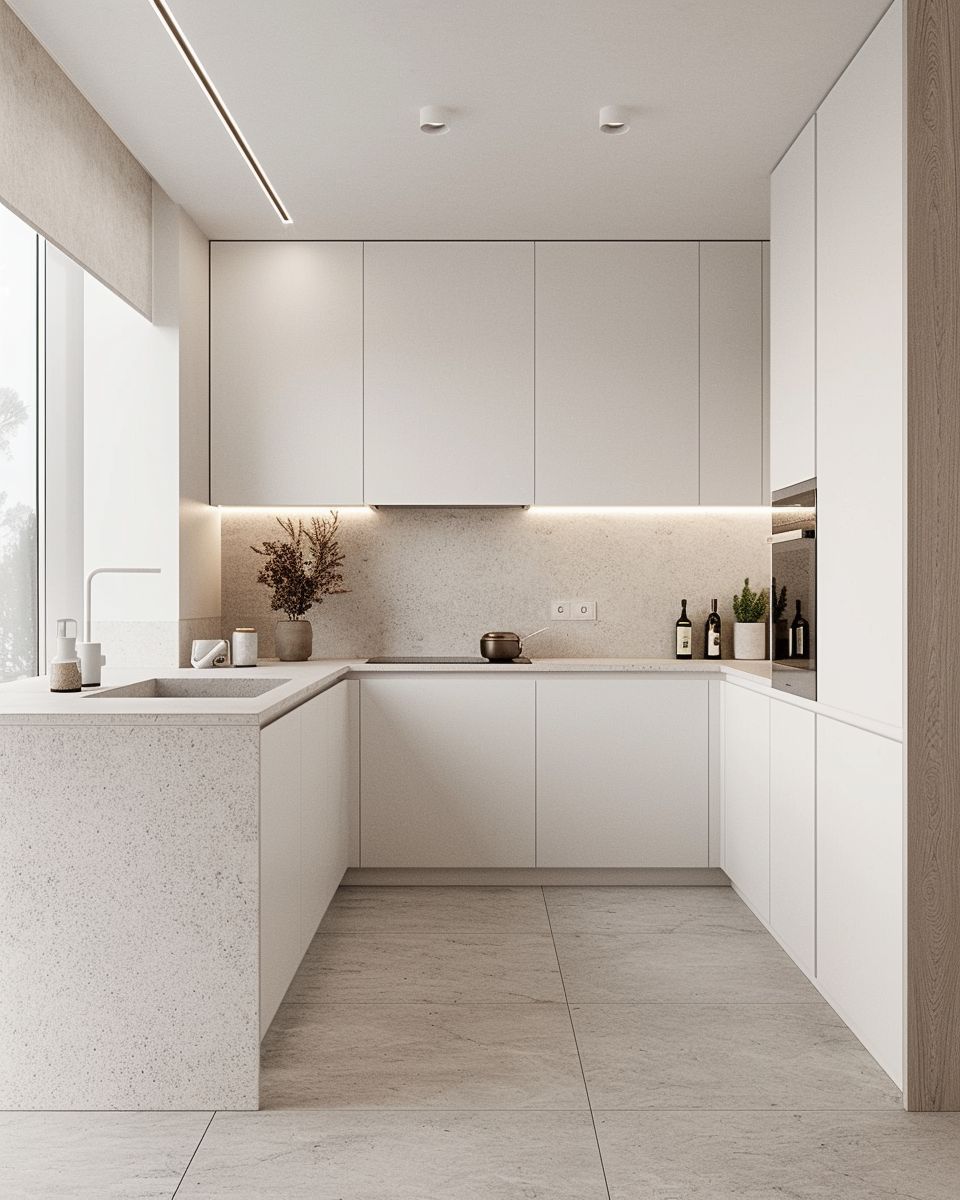
Choose a calm surface in a quality porcelain and you’re making one of the safer long-term choices in tile in South Africa right now; the durability does the sustainability work, and the format does the beauty work.
The best way to decide is to stand on it. Photographs flatten large format — you need to see a 600×1200 floor at full scale to understand what it does to a room. Visit a Tiletoria showroom, walk the displays, and talk the layout of your actual rooms through with a consultant. Bring your floor plan; we’ll bring the judgement.